
When I think about transforming a backyard, I envision a space that reflects both beauty and functionality. By creating defined zones, I can seamlessly combine relaxation areas with vibrant gardens. Water features add a touch of tranquility, while thoughtful plant selections enhance privacy. As I explore these ideas, I find myself considering how to make my landscape not only inviting but also sustainable. Let's explore these concepts further and see what resonates with you.
Create Defined Zones

Creating defined zones in your backyard can transform it into a functional and inviting space. Through careful zone creation, I identify primary activities and family needs, optimizing space based on usage.
Hardscaping elements like pathways and patios enhance connectivity, while strategic planting creates natural dividers. With thoughtful outdoor furniture, each zone becomes purposeful, ensuring that every area complements the others beautifully.
Install Water Features

Transforming your backyard with water features can elevate its aesthetic and create a soothing atmosphere. I carefully choose the location, ensuring visibility and proper drainage.
I love installing water fountains for easy maintenance, or a pond for wildlife.
I prepare the site with a liner and gravel, and I remember to focus on pond maintenance—clean filters and monitor water levels to keep everything thriving.
Plant for Privacy and Beauty

When it comes to enhancing my backyard, I've found that planting for privacy and beauty is a rewarding endeavor. I focus on native plants for easy maintenance and biodiversity.
For optimal garden aesthetics, I mix evergreens and flowering shrubs, layering different heights. Fast-growing options like arborvitae provide immediate privacy, while vertical gardening techniques create visually stunning, space-efficient solutions that attract pollinators.
Design Low-Maintenance Landscapes

After establishing a lush, private retreat with native plants, I find it equally important to design landscapes that require minimal upkeep. I've replaced grassy areas with low maintenance groundcovers and installed smart irrigation systems to optimize water use.
Add Functional Outdoor Structures

Incorporating functional outdoor structures into your backyard not only enhances its aesthetic appeal but also elevates its usability. Imagine a cozy pergola with climbing plants, complemented by outdoor lighting that sets the mood for evening gatherings.
Functional fencing adds privacy while framing your space beautifully. Whether it's a fire pit or an outdoor kitchen, these features truly transform your backyard into a dream retreat.
Incorporate Sustainable Elements

Sustainable landscaping isn't just a trend; it's a commitment to nurturing our environment while creating a beautiful outdoor space.
I love incorporating native plants that require less water and attract pollinators. Using eco-friendly materials like recycled pavers and sustainably sourced wood not only enhances aesthetics but also supports biodiversity. Plus, installing drip irrigation systems helps conserve water, making my garden both vibrant and responsible.
Use Outdoor Rugs to Define Spaces

Creating distinct areas in my backyard not only enhances its functionality but also adds a touch of personality. I love using outdoor rugs to visually anchor my garden furniture, like circular rugs for cozy conversation nooks and long runners to delineate pathways.
With bold patterns and weather-resistant materials, these rugs elevate my outdoor decor, creating inviting spaces for everyone to enjoy.
Create a Dedicated Gardening Space
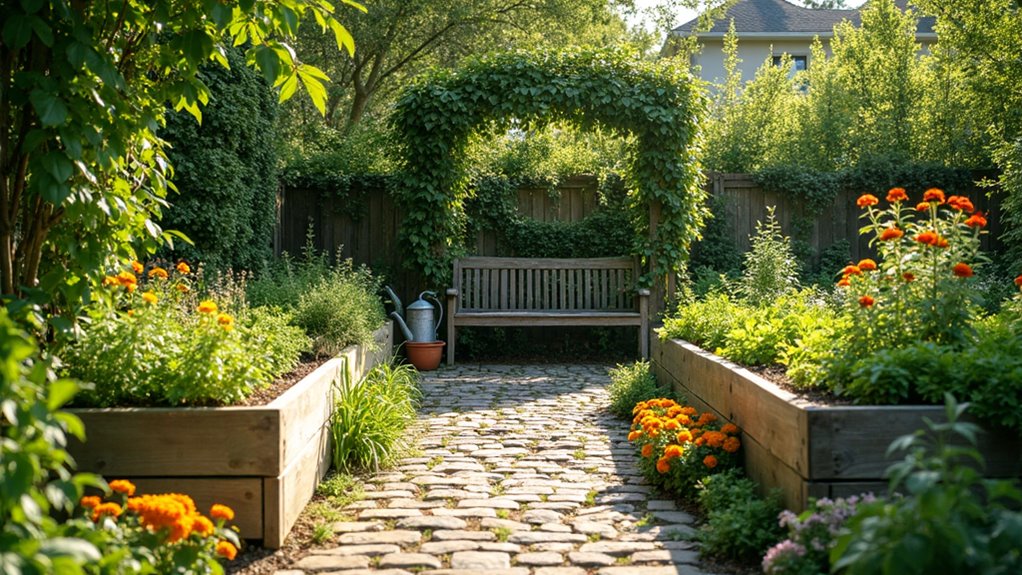
Establishing a dedicated gardening space in my backyard has transformed it into a vibrant oasis where I can nurture plants and unwind. By carefully planning my garden layout, I ensured easy access to water and efficient soil preparation.
I chose a sunny spot, created walkways, and incorporated raised beds. This thoughtful design not only enhances aesthetics but also promotes healthy plant growth and maintenance.
Build a DIY Fire Pit

After transforming my backyard into a lush gardening sanctuary, I realized the potential for even more outdoor enjoyment. I chose a level spot, ensuring it's at least 10 feet from structures for fire safety.
Using fire-resistant bricks, I built a sturdy fire pit, adding decorative touches like seating and lighting. This DIY project not only enhances my outdoor decorations but creates a cozy gathering space too
Install a Pergola for Shade

While enjoying my newly built fire pit, I realized that a pergola could elevate my outdoor space by providing much-needed shade and style. I chose a freestanding design made of cedar, perfectly complementing my rustic aesthetic.
With dimensions of 12×12 feet, I added climbing plants for natural beauty and installed a retractable canopy for versatility. This structure transformed my backyard into a cozy retreat
Incorporate Native Plants

Native plants are the unsung heroes of backyard landscaping, offering beauty and resilience while supporting local ecosystems.
By embracing native landscaping, I've created a sustainable garden that thrives with minimal water and no need for fertilizers. I carefully selected plants suited to my region, mixing textures and colors for year-round interest while providing vital habitats for local wildlife.
It's a fulfilling journey
Utilize Automatic Irrigation Systems

Transforming my backyard into a lush oasis took more than just careful plant selection; it required the precision of an automatic irrigation system. With features like drip irrigation and smart controllers, I achieved incredible irrigation efficiency while conserving water.
My plants thrive with consistent moisture, and I save time and money—making my yard not just beautiful but also eco-friendly.
Collect Rainwater for Garden Use

My backyard's sustainability journey took a giant leap forward when I decided to collect rainwater for garden use. I installed a rainwater cistern, capturing roof runoff through downspouts.
With a 1000-gallon capacity, it enhances stormwater management and ensures my garden thrives, even in dry spells. This system not only conserves water but also reduces my utility bills, making it a win-win